

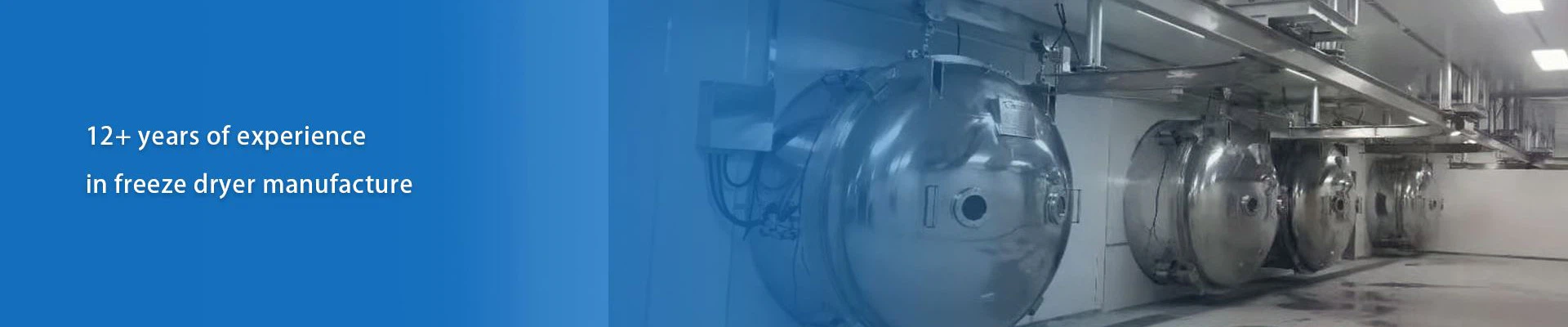
Large vacuum freeze dryers primarily consist of two parts: a refrigeration system and a vacuum system. The items being processed are placed in a low-temperature vacuum environment, where moisture in the air freezes into ice. The ice then sublimates into water vapor under very low pressure and is extracted by a vacuum pump, drying the items being processed. Failure in either the refrigeration or vacuum system prevents processing. Therefore, daily maintenance of freeze dryers is crucial. Any malfunction must be quickly corrected to ensure normal production. Daily maintenance methods for this equipment are as follows:
I. Maintenance of the Vacuum System
The vacuum system primarily consists of the vacuum pump, front chamber, rear chamber, valves on the chamber, mushroom valves, small butterfly valves, and vacuum silicon tubes.
1) Regularly replace the vacuum pump oil to maintain performance.
2) Before starting the vacuum pump, check the oil level (it should be approximately 1/2 full in the sight glass).
3) Before evacuating the chamber, ensure the rear chamber is dry to avoid drawing moisture into the pump, which could affect the pump's efficiency.

II. Maintenance of the Refrigeration System of a Large Direct Air Freeze Dryer
The refrigeration system of a freeze dryer primarily consists of a compressor, expansion valve, water-cooled condenser, evaporator, oil separator, gas-liquid separator, solenoid valve, manual valve, pressure gauge, pressure controller, and filter drier.
The main components of daily maintenance are as follows:
1) Daily routine inspection. Inspections primarily include:
① Check that all required valves are open.
② Check that the compressor pressure is within the normal range.
③ Check that the cooling water pressure and temperature are normal.
④ Check that the compressor oil return and oil level are normal.
⑤ Check that the compressor operating sound is normal.
⑥ Check for abnormal vibration in the refrigeration piping.
⑦ Check for frost on the compressor and expansion valve. If any abnormalities are detected during inspection, the cause should be identified and addressed promptly to eliminate potential safety hazards.
2) When a large vacuum freeze dryer is not in use for an extended period, the refrigerant should be contained in the condenser to prevent refrigerant leakage. During production, the refrigeration system should be regularly inspected for leaks to ensure that any leaks, such as insufficient refrigerant, are promptly addressed. It should be filled in time to avoid affecting the normal operation of the equipment


