

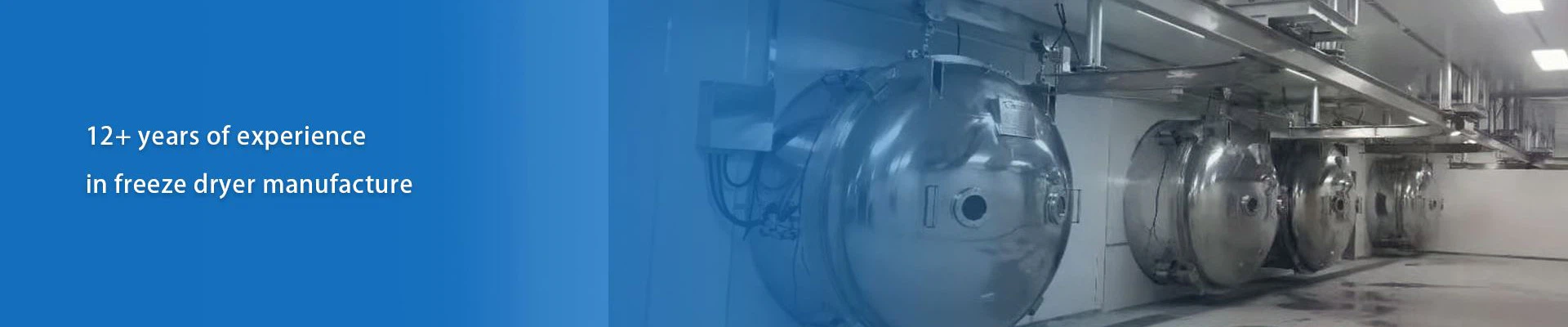
A vacuum freeze dryer is a drying device that removes moisture from materials through condensation. Freeze drying preserves the active ingredients while reducing volume and weight, extending shelf life, and making storage and transportation easier. Many people are unfamiliar with this equipment, so this article will explain its operation steps and briefly introduce the freeze-drying process.
Operational Steps
1. Material Processing: Perform initial processing on the material to be dried, such as mincing and sieving. Weigh and record the mass.
2. Bag the Material: Divide the processed material into appropriate bags and label the bags with information such as the material name, batch number, weight, and packaging date.
3. Place in the Vacuum Freeze Dryer: Weld the bags containing the material and place them in the vacuum freeze dryer.
4. Pretreatment: Start the machine and set the preset parameters for pretreatment.
5. Cooling: Once the material in the bag is frozen, the vacuum pump starts to remove the condensed water.
6. Vacuum Drying. Vacuum drying begins. At this point, parameters such as freezing temperature, vacuum level, heating rate, and grouping need to be adjusted according to the material's properties and requirements until the desired drying condition is achieved.
7. Bonding and Sealing. After drying is complete, remove the bag from the vacuum chamber, bond it together, trim the edges, and weld the top shut, or seal it with a stopper. The sealed bags are packaged and labeled.

Freeze-Drying Process
1. Freezing. The material to be dried is frozen in a vacuum chamber, solidifying the moisture into ice. This reduces condensation during drying and ensures the quality and performance of the material.
2. Vacuuming. The moisture in the ice is removed under vacuum, achieving freeze-drying.
3. Drying and Heating. For highly hygroscopic materials, heating is required to convert solid moisture into vaporized water, increasing the freeze-drying speed.
4. Drying Time. The drying time setting for the vacuum freeze dryer is determined by factors such as the size and shape of the material, as well as the size and type of bag. Generally, the more demanding the material's drying time, the longer the drying time.
5. Freeze-dried material quality measurement. After freeze-drying is complete, freeze-dried material quality measurement is performed. Measurements include tidal volume and internal structure.
6. Result analysis. Analyze and compile statistics based on the test results. If the results are unsatisfactory, adjust the parameters and repeat the drying process.
7. Storage. Freeze-dried materials have excellent durability and can be stored for long periods of time. Ensure that the materials are sealed tightly during storage, and clearly label the contents of each sealed bag.
Understanding the freeze-drying process and mastering the operating procedures of a vacuum freeze dryer are crucial prerequisites for freeze-drying. By following standardized operating procedures, you can fully utilize the advantages of this equipment, achieving high-quality freeze-dried materials and long-term, effective storage.


