

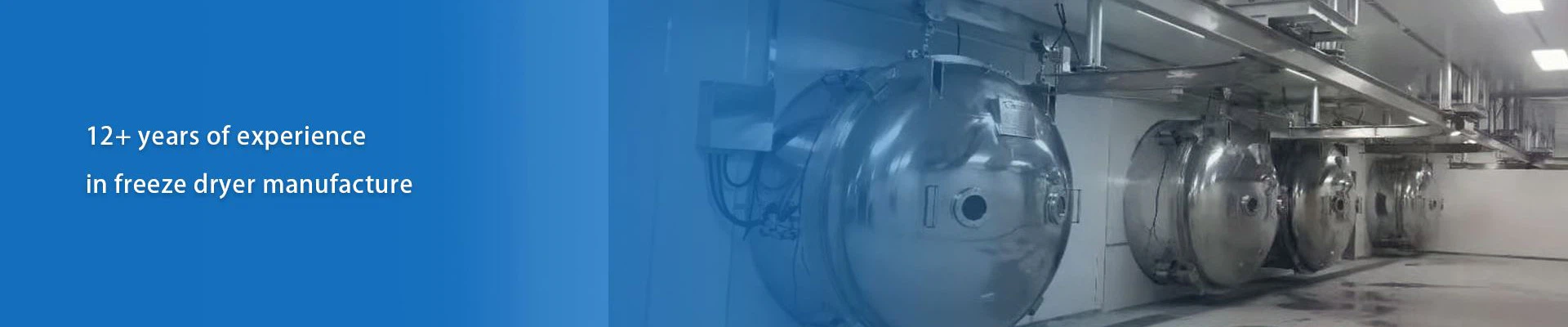
As the food industry continues to pursue quality and innovation, vacuum freeze dryers are emerging as a key driver of technological innovation in food processing. This equipment efficiently dries food by directly converting moisture from a solid state to a gaseous state under low-temperature, vacuum conditions, offering numerous advantages unmatched by traditional methods. Its wide application encompasses a wide range of food products, including fruits and vegetables, meat, seafood, coffee, and tea. It not only effectively addresses food preservation challenges but also maximizes the preservation of nutrients, satisfying consumer demand for high-quality, healthy food. Furthermore, with the continuous advancement of technology and evolving market demand, the future development of vacuum freeze dryers in the food industry is attracting significant attention. They are expected to achieve breakthroughs in cutting-edge areas such as personalized customization and intelligent production, injecting new vitality into the sustainable development of the food industry.
As the food industry continues to pursue quality and innovation, vacuum freeze dryers are emerging as a key driver of technological innovation in food processing. This equipment efficiently dries food by directly converting moisture from a solid state to a gaseous state under low-temperature, vacuum conditions, offering numerous advantages unmatched by traditional methods. Its wide range of applications covers a wide range of food categories, including fruits and vegetables, meat, seafood, coffee, and tea. It not only effectively solves the problem of food preservation but also maximizes the preservation of nutrients, satisfying consumers' demand for high-quality, healthy food. Furthermore, with the continuous advancement of technology and evolving market demand, the future development trends of vacuum freeze dryers in the food industry are attracting considerable attention. They are expected to achieve breakthroughs in cutting-edge areas such as personalized customization and intelligent production, injecting new vitality into the sustainable development of the food industry.

Innovative Applications of Vacuum Freeze Dryers in the Food Industry
Fruit and Vegetable Processing: Preserving Natural Flavor and Nutrition
Vacuum freeze dryers have demonstrated outstanding performance in the fruit and vegetable processing industry. Take freeze-dried strawberries, for example. Using vacuum freeze-drying technology, strawberries are rapidly frozen at low temperatures, allowing the water within them to sublime directly, preserving their original color, shape, and crisp texture to the greatest extent possible. Compared to traditional drying methods, freeze-dried strawberries avoid the damage to nutrients caused by high temperatures, preserving significant amounts of nutrients such as vitamin C and antioxidants. Research has shown that the vitamin C content in freeze-dried strawberries can be several times higher than that in hot air-dried strawberries. Similarly, freeze-dried vegetables such as spinach and carrots not only retain a rich supply of vitamins and minerals, but their porous structure also allows them to quickly return to their original shape and texture upon rehydration, making them a high-quality ingredient in convenience foods and nutritional supplements.
Meat Processing: Improving Quality and Shelf Life
For meat processing, the use of vacuum freeze dryers has solved the long-standing challenges of meat preservation and nutrient retention. For example, freeze-dried beef, under a vacuum freezing environment, rapidly freezes and sublimates the water within the beef, effectively avoiding protein denaturation and nutrient loss caused by high-temperature processing. Freeze-dried beef not only retains its high protein and low fat content but also has a crispier texture. Its extremely low moisture content makes it difficult for microbial growth, significantly extending the product's shelf life. For outdoor and emergency food applications, freeze-dried meat, due to its lightness, easy storage, and nutritious properties, is an ideal choice. Freeze-dried meat can also be used to create specialty meat products, such as freeze-dried pork jerky. The unique processing technique imparts a unique flavor, enriching the variety of meat products.
Aquatic Product Processing: Locking in Freshness and Nutrition
Aquatic products are rich in high-quality protein and unsaturated fatty acids, but they are prone to spoilage. Vacuum freeze dryers offer new solutions for aquatic product processing. Take freeze-dried shrimp, for example. After vacuum freeze drying, the shrimp's original flavor and nutrients are fully preserved, resulting in a plump appearance and delicious taste. By removing most of the moisture, the freeze-dried shrimp is significantly lighter, making it easier to store and transport while reducing the risk of oxidation and microbial contamination caused by moisture. Similarly, products such as freeze-dried fish fillets and freeze-dried sea cucumbers are gaining popularity in the market, satisfying consumer demand for high-quality, convenient aquatic products and expanding the consumption landscape for aquatic foods.
Coffee and Tea Processing: Enhancing Unique Flavors
In the coffee and tea processing industry, vacuum freeze dryers play a key role in preserving the unique flavors of these products. Take freeze-dried coffee, for example. By vacuum freeze-drying concentrated coffee liquid, the volatile aroma components in the coffee are maximized, resulting in a rich aroma, a mellow taste, and a highly refined flavor. Compared to traditional spray-dried coffee, freeze-dried coffee has a flavor closer to freshly ground coffee. In tea processing, vacuum freeze-drying technology can be used to produce instant tea powder, effectively preserving the tea's active ingredients, such as tea polyphenols and caffeine, as well as the tea's natural aroma and color. This provides consumers with a convenient and high-quality tea-drinking experience, promoting the modernization and convenience of traditional tea beverages.
Advantages of Vacuum Freeze Dryers in Food Preservation and Nutrient Retention
Low-Temperature Processing Reduces Loss of Heat-Sensitive Components
One of the significant advantages of vacuum freeze dryers is their low-temperature processing capabilities. Throughout the drying process, food remains in a low-temperature environment, typically freezing between -20°C and -40°C, and the sublimation drying stage typically remains below 50°C. This significantly reduces the degradation, oxidation, and denaturation of heat-sensitive ingredients, such as vitamins in fruit, proteins in meat, and aromatic substances in coffee and tea, caused by high temperatures. For example, freeze-drying fruits and vegetables can increase the retention rate of heat-sensitive vitamins like vitamin C several times compared to traditional hot air drying, making freeze-dried foods closer to fresh food in terms of nutrition and flavor.
Vacuum Environment Inhibits Oxidation and Microbial Growth
The vacuum environment created by a vacuum freeze dryer effectively inhibits oxidation and microbial growth. The extremely low oxygen content in a vacuum environment reduces the oxidation of ingredients like fat and pigments, maintaining the stability of the food's color and flavor. Furthermore, microorganisms are less able to survive and reproduce in a vacuum environment with low water activity and lack of oxygen, further extending the shelf life of food. For example, freeze-dried meat, when vacuum-packed, can maintain a shelf life of several years, maintaining stable quality during storage with minimal loss of nutrients.
Fully Preserving Nutrients and Original Structure
Food processed using vacuum freeze-drying technology can fully preserve its nutrients and original structure. During the freezing process, the water in the food rapidly crystallizes, and the resulting ice crystals minimize damage to the cell structure. During the sublimation drying stage, the water directly transitions from solid to gaseous, avoiding the loss of nutrients and structural collapse caused by the migration of liquid water. Therefore, freeze-dried foods not only retain nutrients such as protein, fat, vitamins, and minerals, but also maintain their original texture and taste. For example, freeze-dried vegetables quickly regain their original tender texture upon rehydration, providing consumers with a similar eating experience to fresh vegetables.
Development Trends of Vacuum Freeze Dryers in the Food Industry
Personalized Customization: Meeting Diverse Consumer Needs
With increasing consumer demand for personalized food, vacuum freeze dryers will continue to develop in the direction of personalized customization. On the one hand, freeze-drying process parameters, such as freezing rate, sublimation temperature, and time, can be adjusted to precisely control food flavor, texture, and nutritional content, tailored to the taste preferences and nutritional needs of different consumers. For example, high-protein, low-fat freeze-dried meat products can be customized for fitness enthusiasts, and vitamin- and mineral-rich fruit and vegetable snacks can be customized for children. On the other hand, vacuum freeze-drying technology can be used to develop unique food formulations and formats. For example, by freeze-drying multiple ingredients together, new taste and nutritional combinations can be created, satisfying consumers' demand for novel and unique foods.
Intelligent Production: Improving Efficiency and Quality Stability
Intelligent production is a key trend in the future development of vacuum freeze dryers. By incorporating advanced sensor technology, automated control, and artificial intelligence algorithms, the equipment can monitor and control parameters such as temperature, vacuum level, and material state during the drying process in real time, achieving precise control. For example, intelligent algorithms can automatically optimize the freeze-drying curve based on material characteristics, improving drying efficiency while ensuring product quality stability. Furthermore, intelligent production enables remote monitoring and fault diagnosis of equipment. Operators can monitor equipment operating status anytime, anywhere via mobile phones, computers, and other devices, enabling timely maintenance and adjustments. This reduces downtime, improves production efficiency, and reduces labor costs.
Energy Saving and Environmental Protection: Responding to the Global Initiative for Green Development
Against the backdrop of the global advocacy for energy conservation and environmental protection, vacuum freeze dryers will continue to optimize their designs to improve energy efficiency and minimize environmental impact. Firstly, improvements to the refrigeration, heating, and vacuum systems, along with the adoption of energy-efficient components, will reduce energy consumption. For example, new insulation materials are being developed to minimize heat loss, while heat pump technology is being used to recover waste heat and achieve energy recycling. Secondly, the use of environmentally friendly refrigerants and pollution-free production processes will reduce waste gas and wastewater emissions, aligning with sustainable development requirements. In the future, energy-saving and environmentally friendly vacuum freeze dryers will become mainstream in the market, helping the food industry achieve a green transformation.
Multifunctional Integration: Expanding Application Scenarios
To meet the diverse production needs of the food industry, vacuum freeze dryers will develop towards multifunctional integration. In addition to traditional freeze-drying functions, they can also integrate pre-treatment, packaging, and other functions, enabling one-stop processing from raw materials to finished product. For example, pre-processing modules such as cleaning, slicing, and pre-freezing are integrated within the equipment to improve production efficiency and reduce the risk of contamination during material transfer. Furthermore, advanced packaging technology enables automated packaging of freeze-dried foods, ensuring that product quality is not compromised during the packaging process. Furthermore, multifunctional integrated vacuum freeze dryers can flexibly adjust process parameters to accommodate the processing needs of different food types, further expanding their application scenarios and providing food companies with more convenient and efficient production solutions.
Conclusion
Vacuum freeze dryers have demonstrated strong innovation in the food industry, from fruits and vegetables to meat, seafood, coffee, and tea, offering significant advantages in food preservation and nutrient retention. By utilizing low-temperature processing, a vacuum environment, and the complete preservation of food's original structure and nutrients, consumers are provided with high-quality, nutritious foods that are convenient to store and consume. Looking into the future, with the gradual advancement of development trends such as personalized customization, intelligent production, energy conservation and environmental protection, and multi-functional integration, vacuum freeze dryers will play a more important role in the food industry. They will not only promote the continuous upgrading of food processing technology, but will also further meet the increasingly diversified needs of consumers, helping the food industry move towards a higher quality and more innovative development stage, bringing more surprises and possibilities to people's diet and life.


