

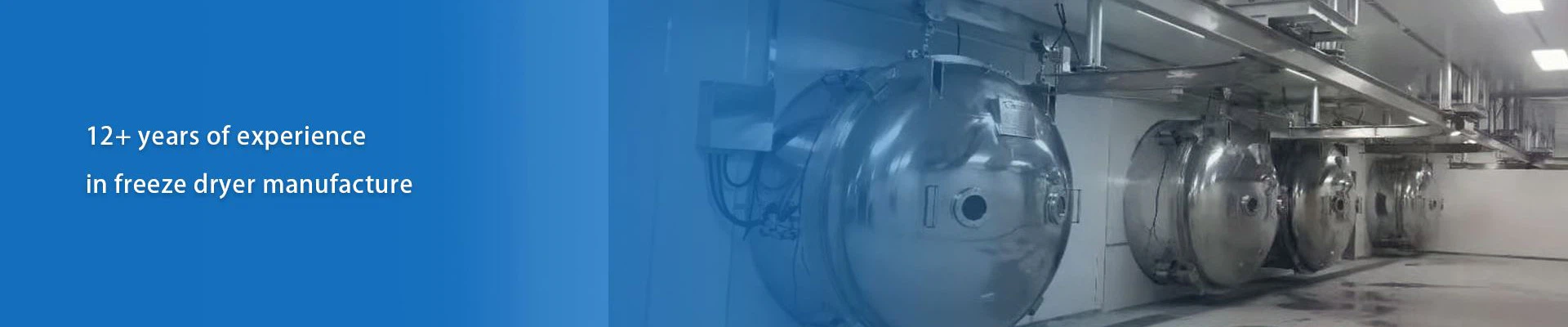
A vacuum freeze dryer is a technical method of pre-freezing articles containing water and then sublimating the water in a vacuum to get dry articles. Freeze-dried articles are easier to be preserved for a long time. After adding water, it can return to the state before freeze-drying and maintain the original biochemical characteristics. It is widely used in biomedicine, pharmacy, biological products, chemical industry, food, and other industries. For the drying of heat-sensitive substances, such as antibiotics, vaccines, blood products, enzymes, and hormones, vacuum freeze-drying technology has more advantages.
Here is a basic operation strategy of a vacuum freeze dryer that must be seen by novices.

1. S-type operation (standard type)
(1) Put the sample into the tray, then put the tray into the freeze-drying rack, place and fix the sample temperature sensor, put the freeze-drying rack into the cold well, cover the pre-freezing insulation cover, pre-freeze and freeze until the sample is completely frozen and stored for a period of time.
(2) Take out the pre-frozen material tray and freeze-drying frame from the cold well, place the support tray above the opening of the cold well, place the freeze-drying frame on the support tray and cover the glass cover.
(3) Tighten the charging valve, click the "vacuum gauge" button on the screen, the vacuum degree is 110kpa, and then click the "vacuum pump" button to start the vacuum pump. The vacuum degree drops rapidly, and it is normal if it is less than or equal to 10Pa.
(4) After drying for a long time, check the sample curve and visually check whether the sample is completely dry. Then open the vacuum filling valve, click the "vacuum pump" button to stop the vacuum pump. Click the "vacuum gauge" button to close the vacuum gauge.
(5) Remove the glass cover, take out the material tray from the freeze-drying rack, load the sample into the tray and complete the drying of the conventional configuration. Click the "refrigerator" button to turn off the compressor and stop the equipment.
2. T-type operation (gland type)
(1) Put the sample bottle into the tray with cover, then put the tray into the freeze-drying rack, place and fix the sample temperature sensor, put the freeze-drying rack into the cold well, cover the insulation cover, pre-freeze, pre-freeze until the sample is completely frozen and stored for a period of time.
(2) Take out the freeze-drying frame from the cold well, quickly transfer the material tray to the gland freeze-drying frame, place the freeze-drying frame above the cold well and cover the glass cover. Ensure that the lower end face of the glass cover is in full contact with the "O" ring.
(3) Tighten the charging valve, click the "vacuum gauge" button on the screen, the vacuum degree is 110kpa, and then click the "vacuum pump" button to start the vacuum pump. It is normal that the vacuum degree drops rapidly and the vacuum degree ≤ 10Pa.
(4) After the vacuum freeze dryer dries for a long time, check the sample curve and visually check whether the sample is completely dry. Turn the gland handle above the glass cover clockwise to turn the screw on the gland frame and lower the low-pressure cover plate. Press the bottle cap into the bottle to realize vacuum sealing. Then open the vacuum charging valve of the vacuum freeze dryer and click the "vacuum pump" Button, the vacuum pump stops running. Click the "vacuum gauge" button to close the vacuum gauge. Remove the glass cover, take out the material tray from the freeze-drying rack, load the sample into the tray, and configure the drying gland. Click the "refrigerator" button to turn off the compressor and stop the equipment.


