



Commercial Lyophilizer
Size: from 0.5 to 200m²
Highlight: can be customized
Warranty:one year
Commercial lyophilizer
Lyophilizer and freeze dryer are synonymous names for the same equipment. A lyophilizer executes a water removal process typically used to preserve perishable materials, to extend shelf life or make the material more convenient for transport. Lyophilizers work by freezing the material, then reducing the pressure and adding heat to allow the frozen water in the material to sublimate.
A lyophilizer functions in three phases, with the first and most critical being the freezing phase. Proper lyophilization, otherwise known as freeze-drying, can reduce drying times by 30%.
Freezing Phase
A lyophilizer uses various methods to freeze the product. Freezing can be done in a freezer, a chilled bath (shell freezer), or on a shelf in the lyophilizer. The lyophilizer cools the material below its triple point to ensure that sublimation, rather than melting, will occur. This preserves the material’s physical form.
A lyophilizer most easily freeze-dries large ice crystals, which can be produced by slow freezing or annealing. However, with biological materials, when crystals are too large they may break the cell walls, and that leads to less-than-ideal freeze-drying results. To prevent this, the freezing is done rapidly. For materials that tend to precipitate, annealing can be used. This process involves fast freezing, then raising the product temperature to allow the crystals to grow.

Primary Drying (Sublimation) Phase
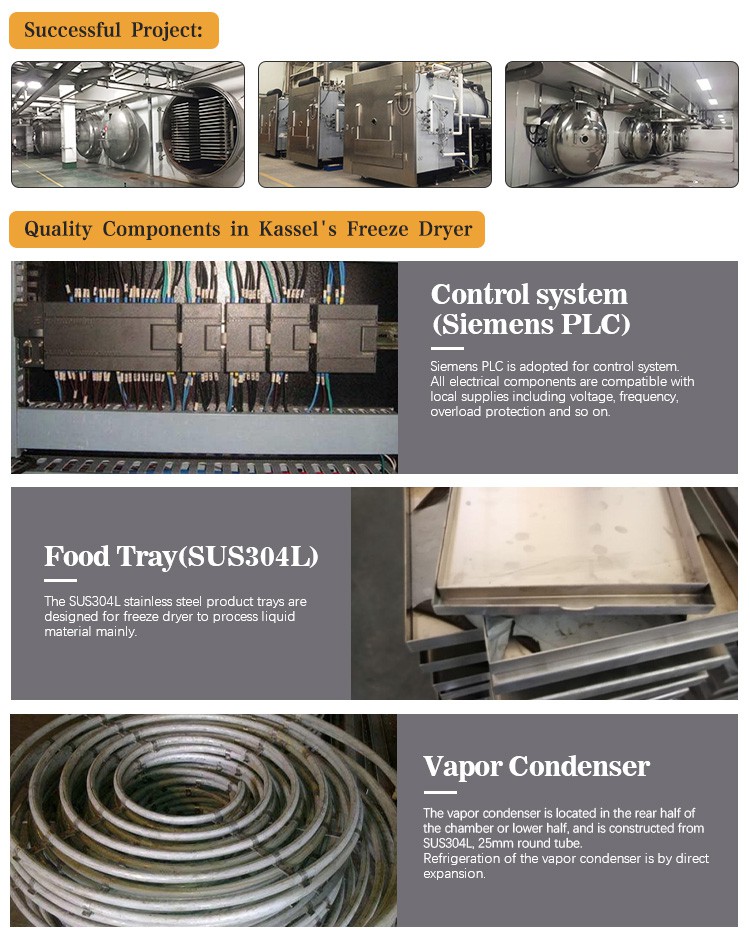
A lyophilizer's second phase is primary drying (sublimation), in which the pressure is lowered and heat is added to the material in order for the water to sublimate. The lyophilizer's vacuum speeds sublimation. The lyophilizer's cold condenser provides a surface for the water vapor to adhere to and solidify. The condenser also protects the vacuum pump from the water vapor. About 95% of the water in the material is removed in this phase. Primary drying can be a slow process. Too much heat can alter the structure of the material.
Secondary Drying (Adsorption) Phase
A lyophilizer's final phase is secondary drying (adsorption), during which the ionically-bound water molecules are removed. By raising the temperature higher than in the primary drying phase, the bonds are broken between the material and the water molecules. Freeze-dried materials retain a porous structure. After the lyophilizer completes its process, the vacuum can be broken with an inert gas before the material is sealed. Most materials can be dried to 1-5% residual moisture.
Parameter:
Model | KFD -1 | KFD -2 | KFD -5 | KFD -10 | KFD -20 |
Type | (Conductive Type) | ||||
Ice capacity (Kg/batch) | 15KG | 30KG | 75KG | 150KG | 300KG |
Condenser temperature (°C ) | < -45 C | ||||
Shelf temperature (°C) | -30 ~60 °C | ||||
Pre -freezing | (in Original Place) | ||||
Shelf area (m2) | 1 m2 | 2 m2 | 5 m2 | 10 m2 | 20 m2 |
No. of shelves | 5+1 | 6+1 | 5+1 | 11+1 | 14+1 |
Shelf dimensions (m) | 0.5*0.4 | 1.0*0.4 | 1.25*0.8 | 1.2*0.8 | 1.45*1.0 |
Shelf spacing (mm) | 60 | 60 | 70 | 70 | 70 |
Medium | (Silicon Oil) | ||||
No. of trays | 5pcs | 12pcs | 30pcs | 66pcs | 126pcs |
Tray dimensions (mm) | 400*500 | 345*495 | 395*415 | 395*395 | 470*325 |
Refrigerant | R404A | ||||
Cooling Method | (Air-cooled) / (Water-cooled) | ||||
Final vacuum (Pa) | 10Pa | ||||
Deforesting method | (Hot water) / (Steam) | ||||
Total power (kW) | 9kw | 13kw | 20kw | 40kw | 50kw |
Installation area (m2) | 3 | 6 | 9 | 11 | 15 |
Chamber dimension(m) | 1.2*0.6*1.8 | 1.5*1.0*1.8 | 2.5*1.3*2 | 3.0*1.3*2.5 | 3.7*2*2.5 |
Weight (kg) | 1500 | 2000 | 2500 | 3800 | 8500 |

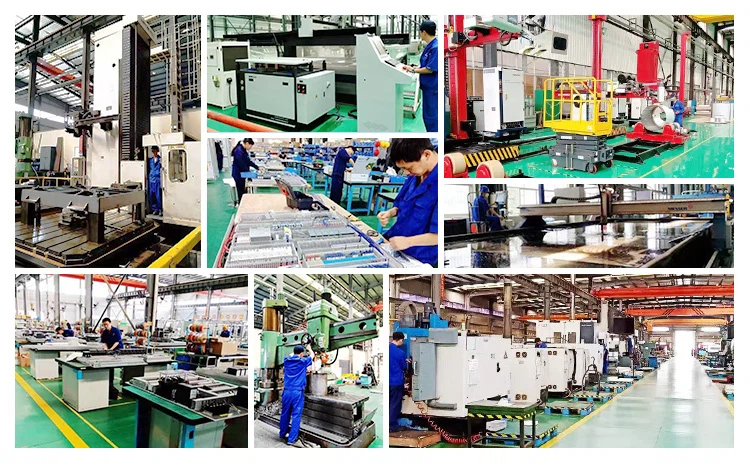
 WORKSHOP:

Hot Tags: Commercial Lyophilizer, China, factory, suppliers, manufacturers, customized, price, made in China, food drying machine, freeze dryer vacuum pump, freeze dryer black friday sale, freeze dryer energy consumption, buy discount freeze dryer, china freeze dryer
You Might Also Like


Send Inquiry