

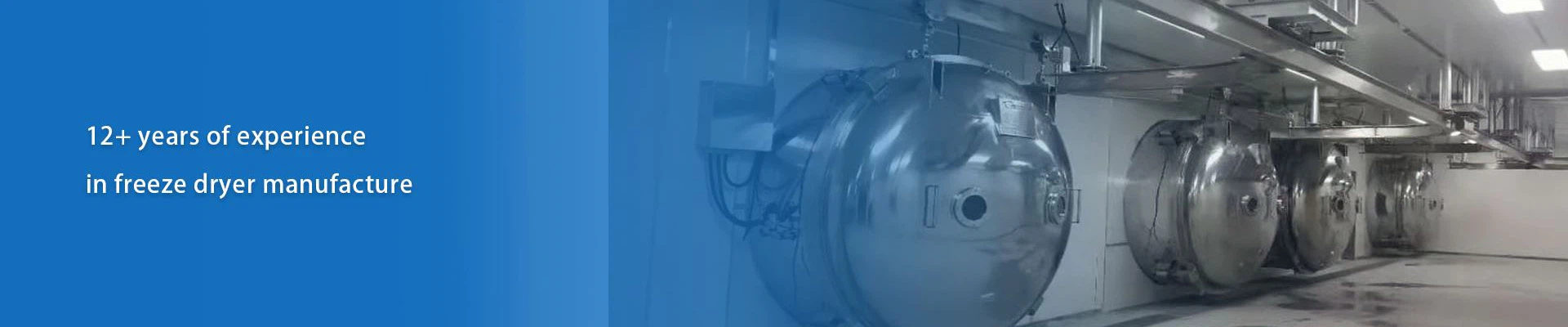
The pharmaceutical freeze dryer was first invented by the British in 1813. The experiment was started in 1909. This method was used for freeze-drying preservation of antitoxins, strains, rabies virus, and other biological products, and achieved good results In the Second World War, the great demand for blood products greatly stimulated the development of freeze-drying technology, which has entered the stage of industrial application Since then, the rapid development of refrigeration and vacuum equipment has provided strong material conditions for the rapid development of freeze-drying technology In the 1980s and 1990s, the rapid development of science and technology has provided a strong driving force for the rapid development of freeze-drying technology. Great achievements have been made in freeze-drying damage and protection mechanism, drug freeze-drying process, drug freeze-vacuum dryer, and so on However, drug freeze-drying technology is a marginal discipline, which needs the intersection and integration of biology, pharmacy, refrigeration, vacuum, and control, so there are still problems to be solved.

Because lyophilized drugs are porous, can be stored stably for a long time, and can be easily rehydrated to restore their activity, freeze dryer (hereinafter referred to as lyophilizer) is widely used to prepare live veterinary vaccines, bacterial vaccines, and other biological products In China, drug freeze dryer has long been used in the pharmaceutical industry. Biological drugs such as antibiotics and vaccines are produced by the freeze-drying method. In the mid-1980s, the Northeast began to produce ginseng, pilose antler, and forest products by freeze-drying method, and then gradually expanded to food production, but the scale and application scope are still very small. In addition, prostaglandin E1 for injection and acyclovir for injection belong to drugs made by freeze-drying.


