



Pet Food Frozen Dryer
Who are We? Your Reliable Food Freeze Dryer Manufacturer and Supplier
Kassel Machinery (Zhejiang) Co. , Ltd. , a member enterprise of the Kassel group, is a supplier specializing in providing the overall scheme of vacuum freeze drying equipment.
Professional Manufacturer
Kassel is your professional food freeze dryer manufacturer and supplier with over 10 years of experience.We believe Kassel has all the cooling capacities and models of food freeze dryer to meet your specific cooling needs.
Free Design Options
Based on our extensive experience in design and manufacturing, we are willing to help you develop a product design and selection that suits your specific cooling needs.
Maximize Your Benefits
Kassel provides high quality products to save you costs.Our products are designed and manufactured with optimized refrigeration solutions to maximize your benefits.
Fastest Delivery Time
Our warehouse always has a complete inventory of finished products, which will ensure that all our products can meet your urgent needs at the first time.
12 Months Warranty
When you purchase all of our products, you will enjoy a warranty period of up to 12 months.
7*24 Hours Online Support
Kassel provides 24*7*365 online services to support your business.No matter you have any questions about product selection, quotation, delivery, installation/debugging, after sales service, etc. , just leave a message and we will get quick feedback within 2 hours.


What is Pet Food Frozen Dryer?
Pet food frozen dryer is a vacuum dryer that dehydrates pet food. Freeze drying is a form of dehydration in which pet food has its intrinsic moisture removed through condensation. It is a proven process that creates food with very low moisture levels that can be stored, unopened, at room temperature, much longer than traditional pet foods, without spoiling.

Advantages of Pet Food Frozen Dryer

01
Easy preparation
Food is prepared for freeze-drying the same way food is prepared for regular freezing. After rinsing and removing blemishes, blanch most vegetables; pretreat fruits if necessary to prevent browning; meats can be freeze-dried cooked or raw; casseroles are typically assembled from already cooked foods. Place the product on the trays and push the button to start the machine.

02
Storage
When finished, freeze-dried products are shelf-stable, lightweight, and food safe for longer other food preservation methods. Conservative food safety estimates of commercial food "canned" in metal-Mylar-type pouches is 8 to 10 years . This does not address the food quality after that time, only the food safety.

03
Nutrition
Freeze-dried products rehydrate more fully than dehydrated products, so the taste and texture are closer to fresh with a freeze-dried product than with a dehydrated product.

04
Versatility
Freeze drying works great for fruits and vegetables, but unlike other options, it also perfectly preserves meat, fish, dairy, eggs, ice cream, and even fully-cooked meals.
Analysis of Factors Affecting the Speed of Food Frozen Dryer
The whole process of freeze-drying is actually a process in which heat and mass transfer (water vapor) are carried out at the same time. The heat and mass transfer rate jointly affect the drying rate, thus affecting the whole freeze-drying cycle. All factors affecting heat and mass transfer will affect the drying rate. To sum up, the main factors affecting heat and mass transfer are:

01.Form and composition of materials
02.Pre-freezing rate
03.Loading capacity
04.Pressure in drying chamber
05.Heat transfer mode
Introduction to the Four Major Systems of Pet Food Frozen Dryer
Pet Food Frozen Dryer are high-tech appliances commonly used in the food industry to preserve various perishable products such as fruits, vegetables, meats, and dairy. These machines rely on four major systems to produce freeze-dried food products:

Refrigeration system
This system is responsible for cooling and freezing the food products to temperatures below their freezing point. It consists of a compressor, condenser, evaporator, and expansion valve, and works by circulating a refrigerant gas through the system to absorb heat and transfer it outside the dryer.

Vacuum system
This system is responsible for creating a vacuum inside the dryer chamber, which helps remove the moisture from the frozen food products. It consists of a vacuum pump, vacuum gauge, and vacuum valve, and works by removing the air from the dryer chamber to create a low-pressure environment, which facilitates the sublimation of water molecules.

Heating system
This system is responsible for providing heat to the frozen food products inside the dryer chamber, which helps sublimate the water molecules and turn them into vapor. It consists of heating elements or a hot gas inlet, and works by providing a controlled amount of heat to the frozen food products to facilitate the sublimation process.

Control system
This system is responsible for controlling and monitoring the entire freeze-drying process, including temperature, pressure, and moisture levels inside the dryer chamber. It consists of a microprocessor-based controller, sensors, and displays, and works by gathering data from various sensors and adjusting the operation of the other three systems to achieve the desired outcome.
Freeze Drying Process of Pet Food Freeze Dryer
The freeze drying process of pet food freeze dryer involves several distinct steps.
Pre-treatment
This step involves cleaning and rendering the pet food to remove any dirt, grease, or impurities. It also involves conditioning and adding any preservatives, colorings, or flavorings, as needed.
Freezing
The food is then quickly frozen to around -30°c to -80°c to preserve the food's structure, texture, and nutritional content.
Freezing vacuum
The food is moved to a freeze dryer which removes the moisture by creating a powerful vacuum inside the chamber. The food is exposed to low vacuum, sublimation, and a high-intensity heat source. This vacuum drew moisture out of the food, which is then collected as vapor and stored in a collection tank.
Final drying
This step takes place in the freeze dryer and involves increasing the temperature and vacuum to remove the last traces of moisture.
Packing
The freeze dried food is then packed in either hard vacuum packs or foil pouches which then seals the food. This helps prolong the shelf life and ensures the food stays fresh and tasty.
Our Factory
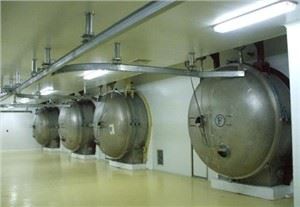
Kassel Machinery (Zhejiang) Co., Ltd., a member enterprise of the Kassel group, Taking "freeze dryer" as the core product makes it possible to provide one-stop freeze-drying service with low cost, high efficiency, and multi-purpose.


Certificate

AAA Certificate

CE Certificate

FCC Certificate

FDA Certificate

ISO9001 Certificate

ISO14001 Certificate

Patent Certificate

Work Safety Certificate
Q: What is the freeze drying process for pet food?
Q: What's the difference between a food dehydrator and a freeze dryer?
Q: What happens to microorganisms in the freeze drying process?
Q: Can freeze dried foods be safely vacuum packaged?
Q: How cold does a food freeze dryer get?
Q: What's the difference between a food dehydrator and a freeze dryer?
Q: How long does it take to freeze dry food?
Q: Can bacteria survive freeze-drying?
Q: Do freeze dryers use a lot of electricity?
Q: Can you freeze dry raw meat?
Q: What is the life expectancy of a freeze dryer?
Q: What is the most popular food to freeze dry?
Q: Why does freeze dried food taste good?
Q: What precautions should be taken when using a freeze dryer?
Q: What do you need to know about freeze drying?
Q: How do you take care of a freeze dryer?
Q: Do you freeze food before putting in freeze dryer?
Q: Do I need to defrost my freeze dryer between batches?
Q: How often do you need to defrost a freeze dryer?
Q: What temperature should a freeze dryer be set at?
Hot Tags: pet food frozen dryer, China, factory, suppliers, manufacturers, customized, price, made in China, inexpensive freeze dryer, food drying machine, freeze dryer for flowers, freeze dryer for food, food dryer, best value freeze dryer
Previous
Fruit Snack Freeze DryerYou Might Also Like



Send Inquiry