



Food Freeze Drying Equipment
Size: from 0.5 to 200m²
Highlight: can be customized
Warranty:one year
Food Freeze Drying equipment
Freeze drying is the process of freezing materials at very low temperatures, extracting liquid through sublimation, and converting water from a solid to a gaseous state. That is, the water (in the material) extracted in this way is sublimated directly from the solid to the gas without going through the liquid phase.
The main advantage of this method - freeze-drying well extends the shelf life and storage time of the product while maintaining the three-dimensional shape and integrity of the product. This is a commonly used preservation technique in the food industry and is applicable to many different types of food. It is capable of producing high-quality products.
1. The principle of the freeze-drying process in food Freeze Drying equipment
Lyophilization is carried out in the following 3 main stages using specialized equipment. The process involves:
Freezing - the rapid freezing of food to avoid the formation of large ice crystals - can damage the structure of the product.
Vacuum - where the product is in a deep vacuum, well below the triple point of water - is the critical point where the solid, liquid, and gaseous forms of the material can coexist.
Drying - The water is drawn out of the material by sublimation, which directly converts the solid ice to gaseous vapor without passing through the liquid phase again (low pressure, to a few millibars, helps with this part of the process). Therefore, the structural integrity and chemical properties of the product can be highly preserved. Foods that will be freeze-dried are usually pre-treated in some way. Common approaches include product concentration, increased surface area, added ingredients such as preservatives, and IQF (Individual Quick Freezing) of smaller food items, which allows the material to flow freely and better suit the process. Pretreatment is usually performed due to cycle time requirements and product quality considerations.

2. Development history of freeze-drying in the food (production) industry
Freeze-drying technology can be traced back to the application of the indigenous peoples of South America. Potatoes and other tubers are grown in the lowlands are transported to higher altitudes, pressed to remove liquids, and then cryopreserved overnight. Thus, this creates a long-lasting food called chuño for use as emergency rations.
It was not until the 1890s that freeze-drying technology really entered the industrial process. Richard Altmann developed a process for freeze-drying plant and animal tissue, but it wasn't widely noticed until the late 1920s and 1930s.
It was around this time that Vital and Elser patented a freeze-drying system that was improved upon Shackell's invention of the vacuum chamber in 1909. This patented system greatly improves the freezing and condensation steps. Subsequently, in the 1950s and 1960s, as consumer demands changed, freeze-drying technology began to find wider use in the food industry.
The application of freeze-drying technology in the food industry was mainly used for military rations and food developed for astronauts in the early days. The relatively longer shelf life of freeze-dried foods enables them to meet the special needs of the military and NASA.
Early attempts at "test-tube" meals and "test-tube" snacks were difficult to rehydrate. This is a major improvement for astronauts, the rehydration of freeze-dried food. Advances in the rehydration process of meals mean that hot meals can also be served aboard a spacecraft.
In contrast to air-drying (another common form of food preservation), the material needs to be heat-treated in the air without losing its boring qualities in the process. However, air-drying can cause physical changes, including shrinkage of the material and destruction of the microstructure, biochemical effects, and chemical reactions.
Food preservation can also be problematic when it comes to microbial infection and spoilage. Even at low temperatures, microorganisms can still be present, which is why food must be packaged and stored properly to avoid absorbing moisture.
Today, freeze-drying technology is used in many common foods, including freeze-dried instant coffee, ice cream, fruits and vegetables, meat and meat substitutes, and more. This process can be used to produce high-quality foods that need to "lock-in" the desired nutrients.

3. Future prospects of freeze-drying in the food (production) industry
The food industry is an industry with [expected future] and [infinite possibilities].
With the development of consumer taste and market economy, the demand for high-quality nutritious food intake is increasing. Similarly, with the development of the global transportation industry, the storage and transportation of food have also become one of the key considerations for governments and enterprises.
Freeze-drying, a time-tested and scientifically proven patented technology, meets evolving social standards and consumer demands.
From strawberries to chicken, coffee, and tea to pastries and ready meals, freeze-drying as a preservation method may have come a long way before its...
Parameter:
Model | KFD -1 | KFD -2 | KFD -5 | KFD -10 | KFD -20 |
Type | (Conductive Type) | ||||
Ice capacity (Kg/batch) | 15KG | 30KG | 75KG | 150KG | 300KG |
Condenser temperature (°C ) | < -45 C | ||||
Shelf temperature (°C) | -30 ~60 °C | ||||
Pre -freezing | (in Original Place) | ||||
Shelf area (m2) | 1 m2 | 2 m2 | 5 m2 | 10 m2 | 20 m2 |
No. of shelves | 5+1 | 6+1 | 5+1 | 11+1 | 14+1 |
Shelf dimensions (m) | 0.5*0.4 | 1.0*0.4 | 1.25*0.8 | 1.2*0.8 | 1.45*1.0 |
Shelf spacing (mm) | 60 | 60 | 70 | 70 | 70 |
Medium | (Silicon Oil) | ||||
No. of trays | 5pcs | 12pcs | 30pcs | 66pcs | 126pcs |
Tray dimensions (mm) | 400*500 | 345*495 | 395*415 | 395*395 | 470*325 |
Refrigerant | R404A | ||||
Cooling Method | (Air-cooled) / (Water-cooled) | ||||
Final vacuum (Pa) | 10Pa | ||||
Deforesting method | (Hot water) / (Steam) | ||||
Total power (kW) | 9kw | 13kw | 20kw | 40kw | 50kw |
Installation area (m2) | 3 | 6 | 9 | 11 | 15 |
Chamber dimension(m) | 1.2*0.6*1.8 | 1.5*1.0*1.8 | 2.5*1.3*2 | 3.0*1.3*2.5 | 3.7*2*2.5 |
Weight (kg) | 1500 | 2000 | 2500 | 3800 | 8500 |
FAQ:
Q1:Freeze dryer price?
A:Among the lyophilizer suppliers of the same level, we belong to the people-friendly, competitive and reasonable price.
Q2:What is the energy consumption of the freeze dryer?
A:We can save energy in many ways, such as pre-freezing, reducing energy losses, using frequency conversion technology. Reduce the power of compressors and vacuum pumps, while ensuring product quality, reducing energy consumption and reducing machine costs.
Q3:Can you provide a total solution?
A:Certainly. We are a professional manufacture of customized vacuum freeze dryer overall solutions; we mainly produce all kinds of large fruit and vegetable freeze dryers | food freeze-drying equipment | production freeze dryers | small freeze dryers | pilot freeze-dryers, etc. .
Q4:Is it all right to make customer's own brand name?
A:Yes, we will meet the needs of customers.
Q5:Are you a manufacturer or trading company?
A: We are the manufacturer with decades of research and development production experience.
Q6: Can you do the design for us?
A: Sure.We will supply you a proposal as to your specific requirement, and each machine is customized to satisfy customer’s need well.
Q7: How can I get a sample to check your quality?
A: We could send you the samples but the freight and the sample are charged.
Q8: How long can I expect to get the sample?
A:We will send the samples to you within 30 days after confirming your needs, and the sample arrival time depends on our distance.
Q9: Packaging & Shipping:
A:Export Wooden case&FOB Shanghai/Ningbo.
Our service:
1. Factory Acceptance Test
2. Equipment installation
1) Equipment layout design.
2) Video guidance for installation details and key parts.
3) Submit the installation plan.
4) Dispatch engineers (with professional translators) for on-site installation and acceptance.
3. User training
1) Provide users with a series of professional training from equipment installation and use to maintenance.
2) Provide long-term free technical consultation on product performance, use, maintenance, etc.
4. Pre-sales and after-sales service commitment
1) Customized service
2) Standard documents
Provide supply documents and verification documents according to the actual situation of users.
3) Equipment warranty
4) Equipment troubleshooting
5. Packaging and Delivery
Sea, land and air are all supported.

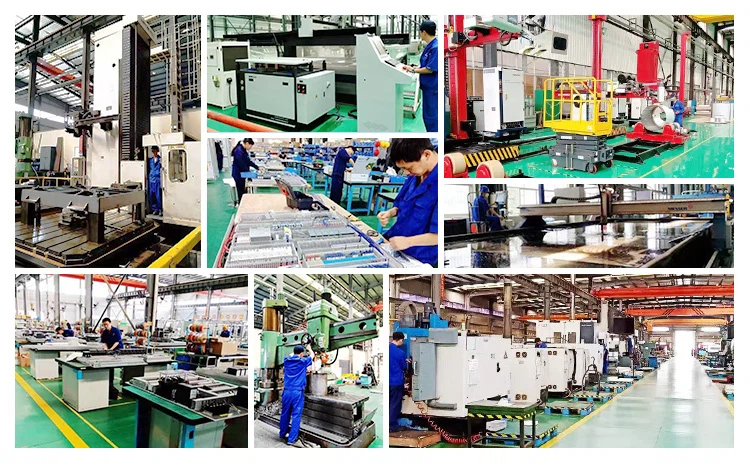
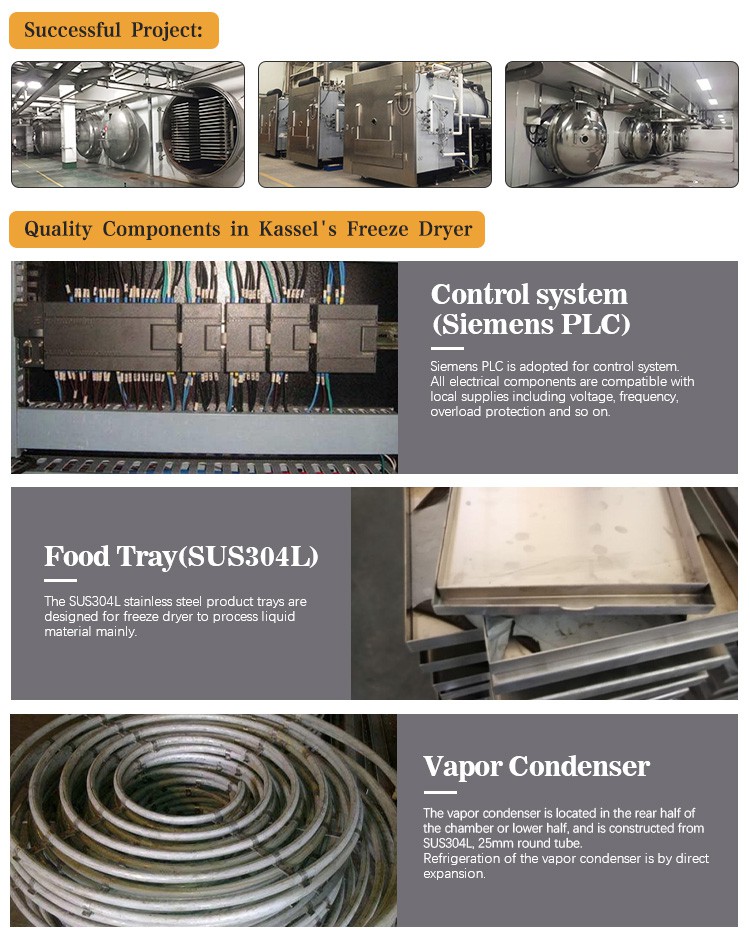 WORKSHOP:

Hot Tags: Food Freeze Drying Equipment, China, factory, suppliers, manufacturers, customized, price, made in China, best value freeze dryer, freeze dryer energy consumption, freeze dryer process, freeze dryer dried food, freeze dryer oilless pump, freeze dryer for taxidermy
You Might Also Like



Send Inquiry